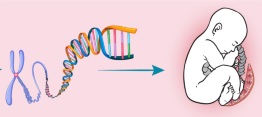
NOB- Bharat news: In a pioneering study, a team of scientists from ICMR-NIRRCH (Mumbai) Dr. Shailesh Pande, Medical Geneticist & Head of Genetic Research Center, Dr. DVS Sudhakar Scientist D, Dr. Shaini Joseph, Scientist D has uncovered new genetic factors behind severe foetal malformations. The findings, published in the Indian Journal of Medical Research, could improve prenatal diagnosis and counselling for affected families. This study was conducted in collaboration with Dr. Vandana Bansal, Professor OBGY & Fetal Medicine expert from Nowrosjee Wadia Maternity Hospital.
Background: Foetal malformations affect nearly 5% of pregnancies worldwide and are a leading cause of pregnancy loss, stillbirths and infant morbidity. Standard tests such as karyotyping and chromosomal microarrays can detect chromosomal aneuploidies and copy number variations but leave more than half of cases unexplained. Whole-exome sequencing (WES), which examines the protein-coding regions of the genome, has recently emerged as a powerful tool for uncovering single-gene causes of developmental disorders.
The Study: The research team examined 44 foetuses with severe malformations identified through ultrasound and routine testing. Cases that remained unexplained after standard genetic testing were further investigated using WES. The study not only confirmed known conditions such as trisomy 21 and 13 but also revealed six novel candidate genes with possible roles in structural anomalies: RUNX2, PALLD, KMT2D, FBN2, CPLANE1, and KDM1A.
Significance: These discoveries expand the catalogue of genes involved in foetal development and provide new leads for diagnosis. Of particular importance is the identification of PALLD, a gene previously connected to neural tube defects in mouse models, now supported by human data.
Clinical Implications
The study recommends a tiered genetic testing approach:
1. Begin with conventional tests for common anomalies.
2. Employ exome sequencing for unexplained cases.
3. Provide families with genetic counselling based on results.
This strategy can improve recurrence risk prediction for families, guide reproductive decision-making, and open avenues for targeted research into prevention.
Expert Comment: “Advanced genomics can uncover hidden causes of foetal malformations. The work demonstrates that such approaches are feasible even in public hospital settings and can have a direct impact on clinical care in India.”
Looking Forward: As genomic technologies become more accessible, incorporating WES into prenatal diagnostics may significantly reduce the burden of unexplained foetal anomalies. The study underscores the need for building genomic infrastructure and training in India to translate these findings into routine practice.
Team of Scientists:
- Dr. Shailesh Pande, Medical Geneticist, Scientist E & Head of Department, Genetic Research Center, ICMR-NIRRCH, Mumbai
- Dr. DVS Sudhakar, Scientist D, Genetic Research Center, ICMR-NIRRCH, Mumbai
- Dr. Shaini Joseph, Scientist D, Genetic Research Center, ICMR-NIRRCH, Mumbai
- Dr. Vandana Bansal, Professor OBGY & Fetal Medicine expert from Nowrosjee Wadia Maternity Hospital
The team of scientists are thankful to Dr. Geetanjali Sachdeva the present Director, Dr. Smita Mahale the former director for the support and guidance and ICMR-DHR for the fundings.
